A ceramic is any of the various hard brittle heat resistant and corrosion resistant materials made by shaping and then firing a nonmetallic mineral such as clay at a high temperature.
What is ceramic magnet definition.
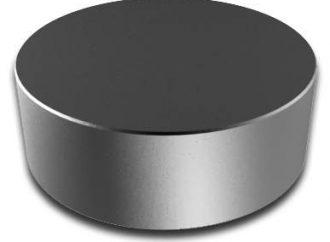
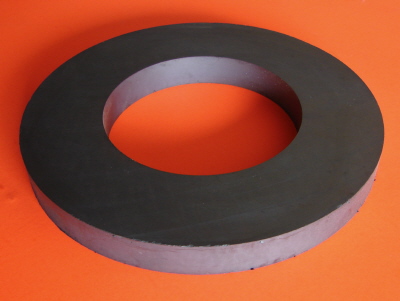
Ceramic magnets also known as ferrite magnets were developed in the 1960 s as a low cost alternative to metallic magnets.
There are a number of advantages to using a ceramic magnet including costs.
The weakest grade of ceramic material is grade 1 which is typically non oriented.
Learn more about ceramic magnets.
Ceramic magnet material is extremely brittle and can chip or break if dropped on a hard surface or if allowed to jump at an attracting object.
Ceramic magnets have the lowest energy density of the commercially viable alloys but are by far the most cost effective.
Common examples are earthenware porcelain and brick.
They are composed of iron oxide and strontium carbonate.
Ferrites are chemical compounds ceramic with iron iii oxide fe 2 o 3 as their principal components many of them are magnetic materials and they are used to make permanent magnets ferrite cores for transformers and in various other high tech applications.
In some cases they may not be suitable for all projects.
This article describes the.
Commercially prepared magnetic ceramics are used in a variety of permanent magnet transformer telecommunications and information recording applications.
The crystallinity of ceramic materials ranges from highly oriented to semi crystalline vitrified and often completely amorphous e g glasses.
As with all magnet alloys ceramic magnets.
Lower grade ceramic magnets can be non oriented.
The magnetic field typically produced by rare earth magnets can exceed 1 4 teslas whereas ferrite or ceramic magnets typically exhibit fields of 0 5 to 1 tesla.
Ceramic magnets are used in mri machines.
Magnetic ceramics oxide materials that exhibit a certain type of permanent magnetization called ferrimagnetism.
A ceramic magnet is one of the most popular materials or group of materials by which magnets are made.
Ceramic magnets composed of strontium carbonate and iron oxide.
Ceramic magnets are less expensive than alnico and neodymium magnets with a lower temperature threshold than alnico but greater than neodymium.
However there are also some disadvantages to the magnet.
Many ferrites are spinels with the formula ab 2 o 4 where a and b represent various metal cations usually including iron.
A ferrite is a ceramic material made by mixing and firing large proportions of iron iii oxide fe 2 o 3 rust blended with small proportions of one or more additional metallic elements such as barium manganese nickel and zinc.
They are electrically nonconductive meaning that they are insulators and ferrimagnetic meaning they can easily be magnetized or attracted to a magnet.