The most common price floor is the minimum wage the minimum price that can be payed for labor.
What is a price floor and what are its economic effects.
More specifically it is defined as an intervention to raise market prices if the government feels the price is too low.
Price floor is enforced with an only intention of assisting producers.
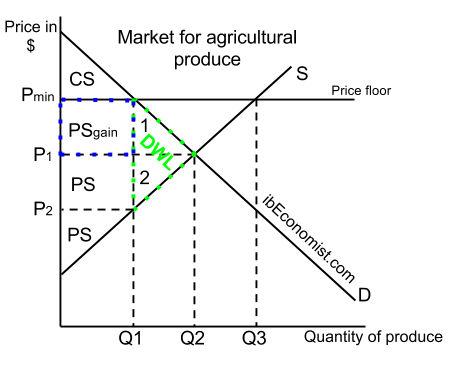
Price floors are also used often in agriculture to try to protect farmers.
In this case since the new price is higher the producers benefit.
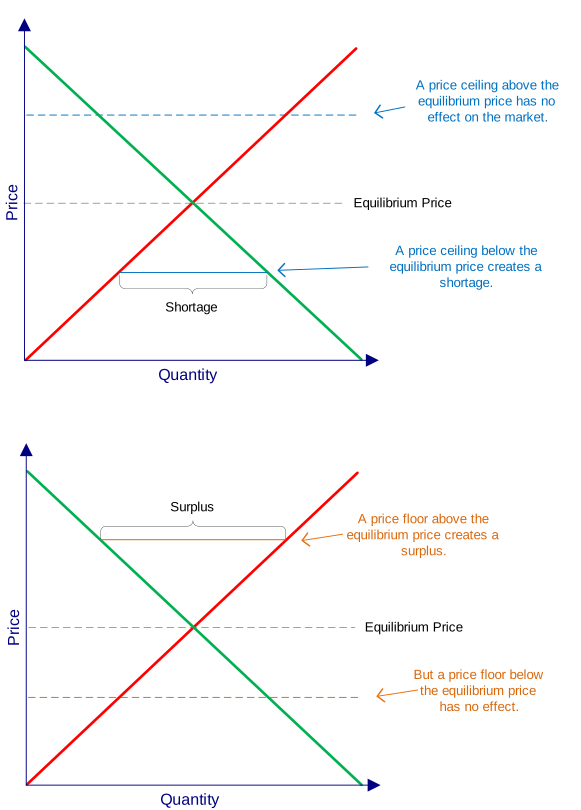
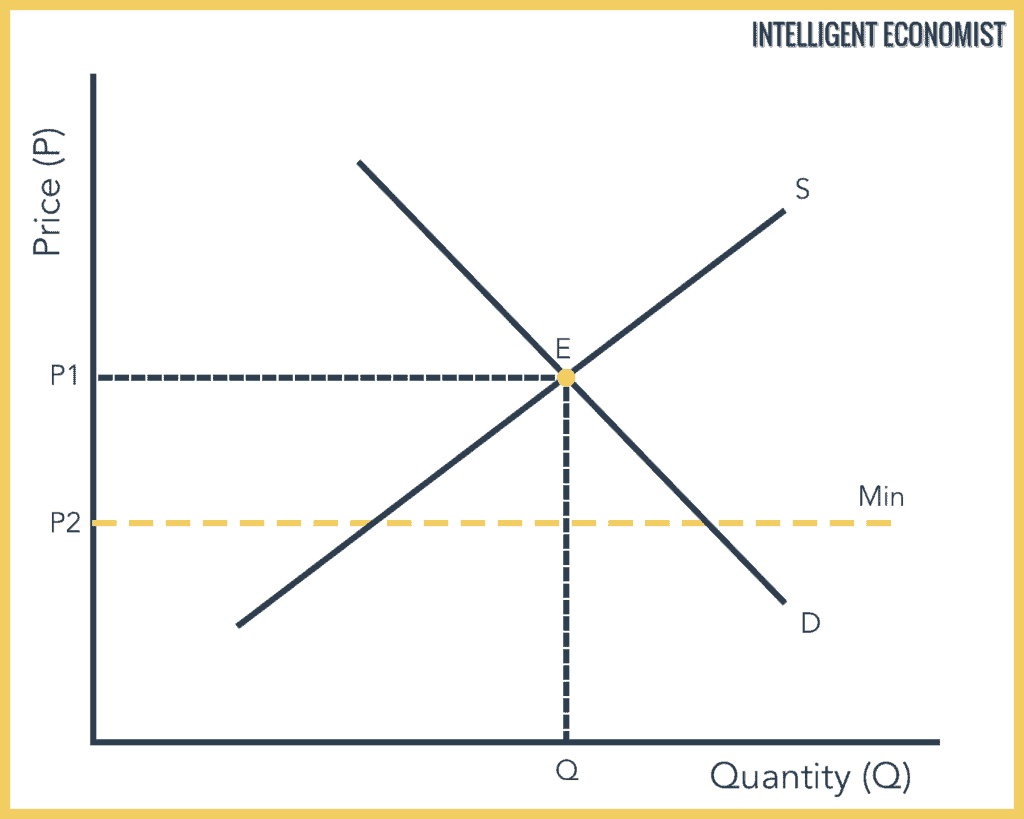
By observation it has been found that lower price floors are ineffective.
A price floor is a government or group imposed price control or limit on how low a price can be charged for a product good commodity or service.
A price floor is the lowest legal price a commodity can be sold at.
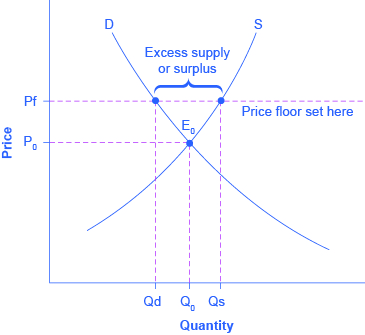
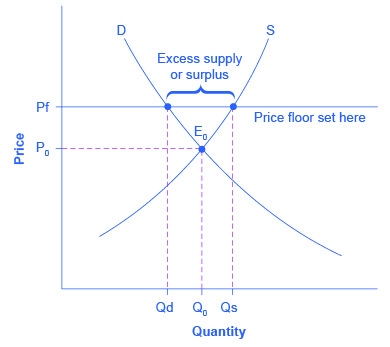
A price floor must be higher than the equilibrium price in order to be effective.
Price floor is a situation when the price charged is more than or less than the equilibrium price determined by market forces of demand and supply.
Types of price floors 1.
A price floor is an established lower boundary on the price of a commodity in the market.
However price floor has some adverse effects on the market.
Government set price floor when it believes that the producers are receiving unfair amount.
Government enforce price floor to oblige consumer to pay certain minimum amount to the producers.
A price floor or a minimum price is a regulatory tool used by the government.
The equilibrium price commonly called the market price is the price where economic forces such as supply and demand are balanced and in the absence of external.