Frost wedging dissolving and other.
What does weathering affect granite.
Of all the building stones granite is the least susceptible to acid rain because its composition is of feldspar and quartz both of which resist attacks of acid.
Hydrolysis is the chemical weathering of minerals by a mildly acidic water that forms when rains dissolves trace gases in the atmosphere.
High temperatures and greater rainfall increase the rate of chemical weathering.
What types of weather affect shale.
The reaction of feldspar minerals in granite with rainwater produces kaolinite white clay known as china clay used in the production of porcelain paper and glass.
Igneous rocks especially intrusive igneous rocks such as granite weather slowly because it is hard for water to penetrate them.
Other types of rock such as limestone are easily weathered because they dissolve in weak acids rocks that resist weathering remain at the surface and form ridges or hills.
Frost wedging clay formations and other.
Rainfall and temperature can affect the rate in which rocks weather.
Frost wedging clay formation and other.
Weathering processes depend upon the pres ence of water the temperature the mineral composition of the rock and its chemical com position.
However the acid found in rain snow fog and dust is beginning to affect some granite buildings and statues granite lake beds and the wildlife they contain.
Basalt weathers quickly with water.
But it affects mountains too.
Granite is a light colored igneous rock formed deeply beneath the earth s surface.
Frost wedging clay formation and other.
Devil s tower in wyoming is an igneous.
What types of weathering affect sandstone.
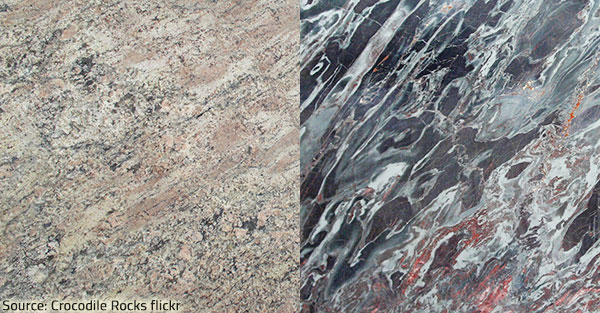
Feldspar gives granite a pink gray green or bluish hue while quartz affects a whitish opaque appearance.
The crystals found in granite are coarsely grained and consist mainly of feldspar and quartz.
Weathering therefore occurs more slowly in granite than in layered sedimentary rocks.
What types of weathering affect granite.
Weathering processes on headstones and monuments alison tymon march 2012 weathering is defined as the breakdown of rock in situ that is without being moved.
Mechanical weathering is the breakdown of rocks into sediments by physical means this type of weathering does not alter the chemical composition of rocks.