The formation of erbium oxide is accomplished via the reaction 4 er 3 o 2 2 er 2 o 3.
What does erbium oxide react with ceramic glazes.
Boron oxide and bismuth oxide.
Erbium oxide is insoluble in water and soluble in mineral acids.
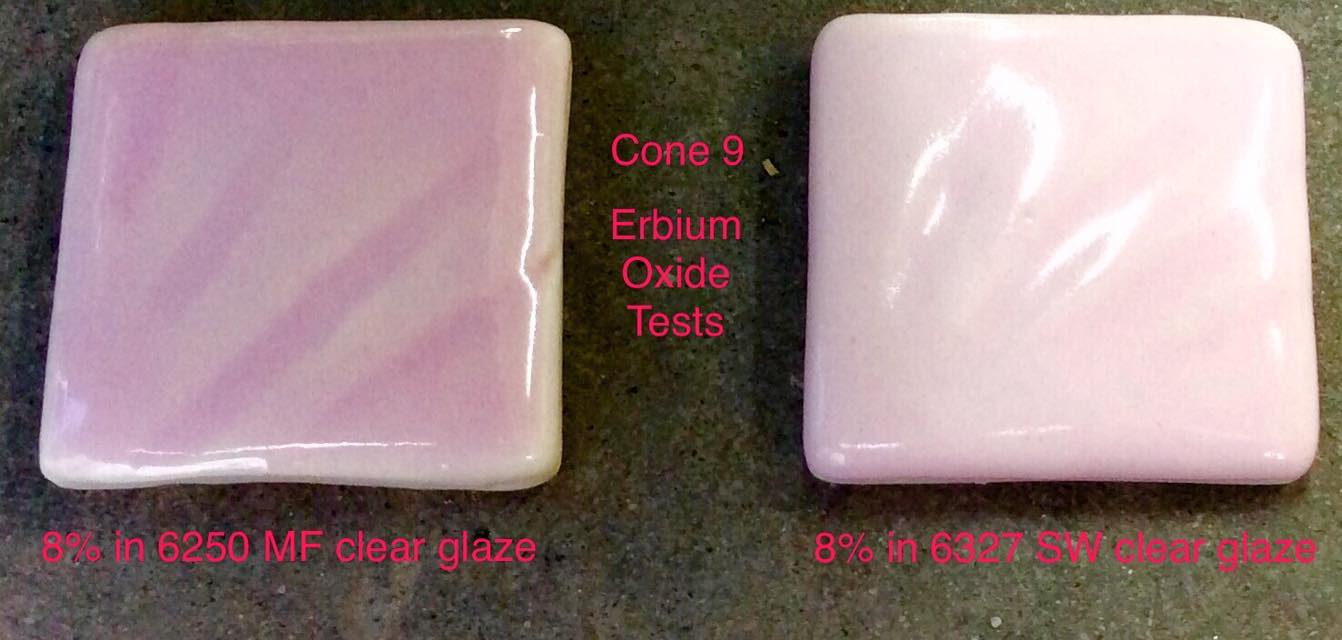
A pink colorant used in the manufacture of crystal glass and ceramic glazes.
Chromium iii oxide can undergo a reaction with calcium oxide cao and atmospheric oxygen in temperatures reached by a kiln to produce calcium chromate cacro 4.
Each of these oxides contributes specific properties to the glass.
A pink colorant used in the manufacture of crystal glass and cerami.
The kiln builds the glaze from these it does not care what material sources what oxide assuming of course that all materials do melt or dissolve completely into the melt to release those oxides.
An oxide which promotes ceramic fusion by interaction with other oxides.
Quantity discounts are available.
It can react with acids to form the corresponding erbium iii salts.
Cerium oxide can be used as an opacifier at low temperatures and gives a tan yellow or orange color in glazes particularly when combined with titanium or rutile.
The acceptable exceptions are the sesquioxides.
Fluxes are monoxides with chemical formulae in the r 2 o and ro group.
Testing erbium oxide and neodymium oxide in campana clear using line blends.
These are cerium praseodymium neodymium and erbium.
The alkaline metal oxides are fluxes which react with the acidic glass former silica.
The oxides which are usually referred to as fluxes are the alkaline oxides because they interact with the glass forming silica.
3 is used as a colorant in ceramic glazes.
Erbium burns readily to form erbium iii oxide.
Red yellow pink brown and especially green.
Priced per quarter pound.
These glazes were found in john britt s book.
The oxidation reaction changes chromium from its 3 oxidation state to its 6 oxidation state.
The elements in the central block are amphoteric able to react as an acid or base alkaline although many show slightly alkaline or acidic properties.
In ceramic glazes and vitreous ceramic clay bodies the alkaline and acidic oxides react together and melt.
Used in glaze as a pure oxide versus s.
Needs lead glaze fired at cone 08 or below.
Materials decompose when glazes melt sourcing these elements in oxide form.
Er 2 o 3 readily absorbs moisture and carbon dioxide from the atmosphere.
Chrome oxide can yield a variety of colors.
It s combined with zirconium silicate to make a yellow stain.